


Politics in Sudan

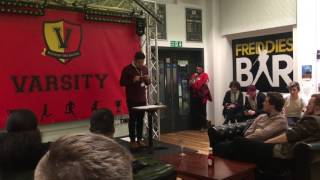
Mr. Ali Mahmoud Hassanien Sudanese's opposition leader and the president of Broad National Movement expressed his concerns of the worst humanitarian and economical situations in Sudan he said:" Before June 1989 there was a plural democratic system in Sudan, in which political parties were functioning freely and there was democratically elected political parliament and elected government".
Mr. Hassanien told the Brainstorm website that in 1950S the Judiciary in Sudan was separate and independent freedom of expression was guaranteed. There was free press, the right assembly and peaceful demonstrations was allowed. He asserted that the Trade Union had freedom of work within a democratically elected leadership parliament. There was an opposition with full right to criticize and oppose the government. Mr. Hassanien said:" Sudanese people had a right to move within Sudan and travel outside Sudan". He explained that the role of law was paramount. The Islamic National Front was a political party and was represented in parliament, they were part of a coalition government. However, in 30th of June 1989 the National Islamic Front with its supporters within the Army managed to lodge a coupe de tat and seized power.
The regime band all political parties and all trade unions and controlled newspapers and media. It arrested and detained all political leaders and human right activists, it established Military course to try summerly all opponents and human rights activists. It imposed curfew and restricted movement of all persons. Therefore, a new era of dictatorship totalitarian rule was imposed in Sudan. It was not only military dictatorship, but it was also coupled with theological opposition They alleged that they are imposing the teaching of Islamic and that they have seized power to imposed so-called teachings of Islam.
Mr. Hassanien said:" In the fact they were defeating the noble cause of Islam which advocates the principles of freedom, justice, peace and co-existence". He asserted that the political parties and trade unions and the people of Sudan in general opposed the regime. They were crushed brutally by the regime; peaceful demonstration was band and the demonstrators were killed. He stated that the instructions of the regime were as openly said "shoot to kill". Marginalize areas revolted against the regime and some took up arms, so civil war started in places such as Darfur, the Nubba Mountains and the Blue Nile State. The war is still going on, crimes against humanity, war crimes and crimes of genocide were committed by the regime.
United Nations Security Council UNSC passed the decision number 1593 in 2005 referring crimes in Darfur region to the International Criminal Court ICC. The ICC issued a warrant of arrest against the president of the regime for crimes of war, crimes against humanity and crimes of genocide. Also, warrant of arrest was issued against a minister of defense and others. However, these warrants of arrest were not executed due to the inability and the unwillingness of the international community to so. therefore, the suspects are free and this seriously undermined the ability of the ICC.
The international community tried to stop the war in Sudan by persuading the warning parties to negotiate but all attempts failed. Mr. Hassanien asserted that the clear majority of people of Sudan believe that negotiation will strength the regime and will diminish the role of the opposition. They believe that the regime must go and must be overthrown to rebuild a new democratic system and to bring all offenders to justice.
Mr. Hassanien said: "The Broad National Movement was formed in October 2010 in London to overthrow the regime through peaceful popular uprising". He stated that the Broad National Movement is gaining support and now it is a centre for all opposition forces under the auspices of the Broad National movement. He explained that the Most of the new organizations who represent the spear head of popular uprising are now part of the centre of opposition newly formed which called the unified centre to overthrow the regime.






Comments